[ez-toc]
Best Materials to Use for Durable Bathroom Renovations
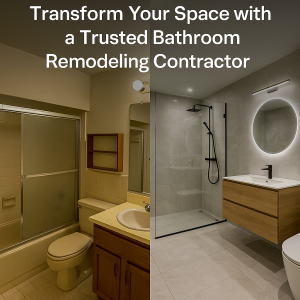
At Modern Home Contracting, we know that a bathroom remodel is more than just a design update—it’s an investment in comfort, function, and long-term value. Whether you’re considering a small bathroom remodel or a full bathroom renovation, choosing the best materials can significantly impact durability, maintenance, and overall ROI. This comprehensive guide will walk you through the top materials that can withstand moisture, wear, and time, helping you plan smarter for your next project.
Why Material Choice Matters in a Bathroom Remodel
Bathroom environments are high in humidity and subject to frequent use. Selecting the wrong materials can lead to premature wear, mold growth, and high maintenance costs. The right materials improve your bathroom remodel ROI, enhance comfort, and reduce future bathroom remodel cost. This is particularly vital for homeowners working with a tight bathroom renovation budget who want long-lasting value from their investment.
The right choice of materials can also reduce cleaning time, increase energy efficiency, and help avoid common problems like grout cracking or tiles lifting. Long-term savings are often realized through better performance and reduced need for repairs or replacements.
Bathroom Flooring: Durability Meets Style
Best Options for Bathroom Flooring
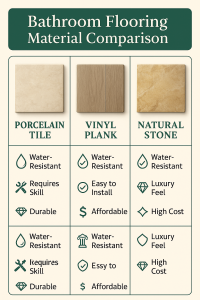
- Porcelain and Ceramic Tiles: These are go-to materials for bathroom flooring due to their strength and moisture resistance. Available in countless textures, patterns, and colors, they allow for complete design freedom while providing superior functionality.
- Luxury Vinyl Plank (LVP): This is an excellent option for those looking for an affordable and easy-to-install solution. LVP resists moisture and mimics the look of wood or stone, making it ideal for both traditional and modern bathroom aesthetics.
- Natural Stone: While more expensive, stone floors such as slate, marble, and granite offer unmatched elegance. They are incredibly durable when sealed properly and bring a spa-like feel to bathroom renovations.
Common Issues with Bathroom Flooring
- Slippery surfaces: Many tiles become slick when wet. Choose tiles rated for wet areas or add textured finishes to enhance safety.
- Grout maintenance: Grout lines attract dirt and mildew. Sealing grout and regular scrubbing are necessary to maintain hygiene.
- Water pooling: Improper sloping during installation can lead to standing water, which damages materials over time and encourages mold growth. Always consult with experienced bathroom remodeling contractors for proper floor leveling.
Bathroom Tiles: Function and Finesse
Recommended Tile Materials
- Subway Tiles: A timeless classic, subway tiles are great for both walls and showers. They’re easy to clean and create a bright, clean look that complements any bathroom layout.
- Mosaic Tiles: These small, versatile tiles add flair to your bathroom floors or shower walls. Their design potential is endless, and they offer excellent grip in wet zones.
- Large Format Tiles: For a sleek, seamless appearance, large tiles reduce grout lines and offer a clean, minimalist aesthetic. They also create the illusion of a larger space, ideal for small bathroom remodel projects.
Common Problems
- Improper waterproofing under tiles: This is one of the most common causes of long-term damage. Water that seeps through can rot subfloors and create mold.
- Cheap adhesives: Low-quality adhesives might not hold tiles in place, especially in humid environments. Always opt for moisture-resistant setting materials.
- Poor alignment: Uneven tiles not only look unprofessional but also trap dirt and moisture, leading to hygiene issues.
Bathroom Shower Remodel: Waterproof and Wear-Resistant Materials
Go-To Materials
- Acrylic Panels: Lightweight and easy to install, acrylic panels are ideal for shower surrounds. They’re non-porous, meaning they resist mold, mildew, and stains.
- Solid Surface Panels: These composite materials provide seamless finishes, are easy to clean, and are available in a wide range of textures and colors. They offer excellent durability with a modern look.
- Glass Tiles: Elegant and reflective, glass tiles work beautifully in accent areas or full walls. They enhance lighting in the shower area and bring a high-end finish.
Issues to Watch
- Leaks from poor installation: Showers must be properly waterproofed at every layer. Small errors in membrane placement or panel sealing can lead to costly leaks.
- Cracks from low-quality materials: Some cheaper acrylic or plastic panels can crack under pressure or from sudden temperature changes.
- Hard water stains: Glass surfaces can be affected by mineral buildup. Use water softeners or specialized cleaners to maintain clarity.
Bathroom Bathtub Remodel: Long-Lasting Choices
Bathtub Materials to Consider
- Acrylic: This popular material offers a great balance of cost, weight, and durability. It heats up quickly and is available in various sizes and styles.
- Cast Iron: Known for its durability and classic charm, cast iron tubs retain heat well, are resistant to chips, and have a luxurious feel.
- Fiberglass: Ideal for budget bathroom remodels, fiberglass tubs are lightweight and easy to install. However, they may scratch and fade more easily over time.
Add-ons and Considerations
- Anti-slip coatings: Many modern bathtubs come with textured bottoms or allow the application of slip-resistant coatings. This enhances safety, especially for seniors and children.
- Built-in storage and shelving: Modern bathtub designs incorporate shelving for toiletries, providing convenience and reducing clutter.
- Shape and depth: Consider soaking tubs or walk-in tubs for increased comfort and accessibility during your bathroom remodel.
Whether your goal is to maximize function or add a touch of luxury, Modern Home Contracting can help you choose the best material based on your bathroom renovation budget and timeline.
Bathroom Cabinets and Storage Ideas
Maximizing bathroom storage is essential for keeping your space clean and clutter-free. A well-designed cabinet layout not only enhances the visual appeal but also improves functionality.
Ideal Materials
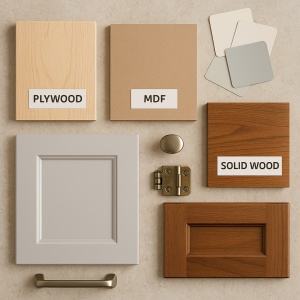
- Plywood with Veneer Finish: Known for its moisture resistance and structural stability, plywood with a veneer finish is ideal for humid environments like bathrooms. The veneer adds a luxurious finish, mimicking solid wood at a fraction of the cost.
- MDF with Laminate: Medium-Density Fiberboard (MDF) covered with laminate offers a smooth, affordable, and customizable option. While less durable than plywood, it’s a practical solution for low-traffic or guest bathrooms.
- Solid Wood: When properly sealed, solid wood provides unmatched beauty and longevity. Teak, oak, and maple are popular choices due to their durability and ability to resist water damage when maintained correctly.
Common Cabinet Mistakes
- Using Particle Board: This material is often cheaper but tends to swell and deteriorate quickly when exposed to moisture, making it unsuitable for bathrooms.
- No Ventilation: Poorly ventilated cabinets trap humidity, which can lead to mold, mildew, and musty odors. Always include ventilation or moisture barriers.
- Ignoring Ergonomics: Cabinets that are too high, too deep, or poorly arranged can be inconvenient. Consider pull-out drawers, lazy Susans, or soft-close mechanisms for better accessibility.
Creative Bathroom Storage Ideas
Incorporating clever storage solutions transforms your bathroom into an organized sanctuary. Here are some ideas that blend style and practicality.
- Floating Vanities: These modern fixtures create a sense of openness by revealing floor space beneath the vanity. They also make cleaning easier and can be customized with built-in drawers.
- Built-in Wall Niches for Showers: Niches are recessed storage spaces within shower walls. They eliminate the need for bulky shelves and keep your toiletries neatly stored and water-safe.
- Over-the-Toilet Cabinetry: Often overlooked, the space above your toilet is prime real estate. Install shelves or cabinets to store towels, toiletries, or decorative items without consuming floor space.
- Mirror Cabinets: Also called medicine cabinets, these combine reflective surfaces with hidden storage, ideal for smaller bathrooms.
Bathroom Lighting and Fixtures
Proper lighting can elevate your bathroom’s ambiance and functionality. A balanced combination of task, ambient, and accent lighting creates a well-lit and luxurious space.
Best Lighting Fixtures
- LED Recessed Lights: These lights are sleek, energy-efficient, and ideal for general lighting. They create an even spread of illumination and are long-lasting with minimal maintenance.
- Vanity Lighting: Installing sconces beside or above your bathroom mirror provides task lighting that’s perfect for grooming, shaving, or applying makeup.
- Accent Lighting: Use LED strips under vanities or around mirrors to add a modern, high-end vibe. Accent lights can also highlight decorative features like textured tiles or architectural niches.
Material Tips for Fixtures
- Stainless Steel: Highly resistant to rust and corrosion, especially in high-humidity environments. Ideal for faucets, towel bars, and showerheads.
- Brass: Timeless and elegant, brass adds warmth and sophistication to any bathroom. Be sure to polish it regularly to maintain its luster.
- Chrome: Affordable and shiny, chrome finishes are a popular choice. While they’re easy to clean, they do require frequent wiping to avoid water spots and fingerprints.
Bathroom Countertops: Functionality First
Choosing the right countertop material ensures both durability and ease of maintenance. Since bathroom counters endure moisture, cosmetics, and cleaning products, functionality is key.
Top Materials
- Quartz: A top contender for bathrooms due to its non-porous nature. It resists stains, doesn’t require sealing, and is available in various colors and patterns.
- Granite: Known for its natural beauty and resistance to heat. Granite must be sealed regularly, but it offers a premium, timeless look.
- Solid Surface: These are man-made countertops that can be molded into seamless designs. They’re easy to clean and repairable if scratched or chipped.
Things to Avoid
- Laminate in Wet Zones: While budget-friendly, laminate can peel or warp when exposed to water.
- Wood Without Proper Sealing: Unsealed wood countertops are prone to water damage and can harbor bacteria.
- Rough or Highly Porous Surfaces: Materials like limestone or untreated concrete can stain easily and are difficult to maintain.
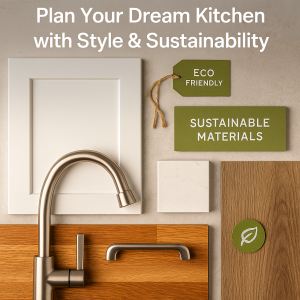
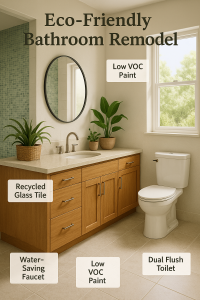
Eco-Friendly Bathroom Remodel Materials
Sustainability is a growing concern for homeowners. Eco-friendly materials not only benefit the environment but also enhance indoor air quality and reduce utility bills.
- Bamboo Cabinets and Flooring: Bamboo is a fast-growing, renewable material. It’s naturally moisture-resistant, making it perfect for bathroom applications.
- Recycled Glass Tiles: Made from post-consumer glass, these tiles are eco-conscious and add vibrant, artistic flair to walls, backsplashes, or floors.
- Low-VOC Paints: Volatile Organic Compounds (VOCs) can emit harmful gasses. Low-VOC or zero-VOC paints improve air quality and reduce health risks.
- Dual Flush Toilets and Water-saving Faucets: These fixtures help conserve water without sacrificing performance, lowering utility bills and reducing environmental impact.
- Energy-Efficient Vent Fans: Look for Energy Star-rated exhaust fans that remove humidity while consuming less electricity.
DIY Bathroom Remodel Considerations
DIY remodeling can save money and offer a sense of accomplishment, but it also comes with challenges. Knowing your limits and starting with manageable projects is key.
- Start Simple: Focus on cosmetic updates such as painting, installing peel-and-stick backsplashes, or swapping hardware. These upgrades require minimal tools and experience.
- Use User-Friendly Materials: Luxury Vinyl Plank (LVP) flooring is waterproof, affordable, and easy to install. Prefabricated vanities can be set up without major plumbing work.
- Avoid High-Risk Installations: Unless you’re experienced, steer clear of cast iron bathtubs, full tile installations, or plumbing relocation, which require specialized tools and expertise.
- Plan Thoroughly: Always measure twice, check water shutoff valves, and read installation guides carefully before starting.
- Know When to Hire Pros: For electrical work, plumbing, or structural changes, it’s safer and often more cost-effective to hire licensed professionals.
Bathroom Remodel Checklist
Remodeling your bathroom requires careful planning and organization. Here’s a comprehensive checklist to guide you through the process and ensure nothing is overlooked:
- Define Your Bathroom Renovation Budget
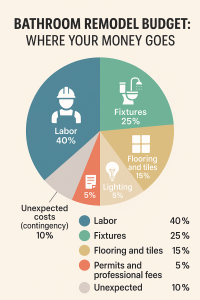
Start by setting a clear and realistic budget. Include costs for materials, labor, permits, and contingency funds (typically 10–15%) for unexpected expenses. Consider getting estimates from multiple contractors for accurate pricing. - Hire Trusted Bathroom Remodeling Contractors
Research and hire licensed, insured, and experienced bathroom remodeling contractors. Read reviews, check portfolios, and ask for references. A reputable contractor ensures your project stays on time and within budget. - Choose Durable Flooring and Wall Materials
Opt for moisture-resistant, long-lasting materials like porcelain tiles, luxury vinyl plank (LVP), or sealed natural stone. For walls, consider cement board behind tiles and mildew-resistant paint to withstand the bathroom’s humid environment. - Select Waterproof and Eco-Friendly Fixtures
Use fixtures like low-flow showerheads, dual-flush toilets, and water-saving faucets. Look for certified eco-friendly brands that conserve resources without sacrificing performance. Waterproof lighting and smart mirrors also add value and convenience. - Plan for Ventilation and Lighting
Proper ventilation prevents mold and mildew. Install a high-quality exhaust fan and consider adding a window if possible. Lighting should include ambient, task (like vanity lighting), and accent lighting to balance function and aesthetics. - Secure Bathroom Remodel Financing if Needed
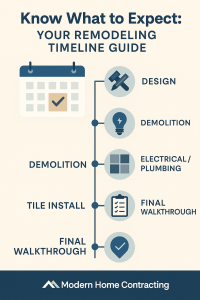
Explore your financing options early. These might include home equity loans, personal loans, or lines of credit. Some contractors also offer payment plans or partnerships with financing companies. - Understand Your Bathroom Remodel Timeline
Establish a timeline with clear milestones. A small remodel may take 2–3 weeks, while a full-scale renovation could take 6–8 weeks. Account for delivery times for materials, permit approvals, and potential delays.
Common Bathroom Remodel Problems
Many homeowners face issues during remodeling that can affect cost, schedule, and final results. Avoid these common mistakes:
- Skimping on Waterproofing
Failing to properly waterproof showers, bathtubs, and floors can lead to leaks, rot, and mold. Always use high-quality waterproofing membranes and sealants. - Poor Ventilation Leading to Mold
Insufficient airflow allows moisture buildup, creating the perfect breeding ground for mold and mildew. A powerful exhaust fan and dehumidifier can make a big difference. - Choosing Aesthetics Over Function
While a beautiful bathroom is desirable, don’t ignore practicality. Storage space, layout efficiency, and accessibility should be prioritized alongside design. - Not Accounting for Bathroom Renovation Budget Limits
Many projects go over budget due to scope creep or underestimating labor and material costs. Track spending and review budget regularly. - Inadequate Planning Leading to Project Delays
Delays are often caused by poor scheduling, unavailable materials, or last-minute changes. A well-thought-out plan with pre-selected items helps avoid setbacks. - Hiring Unlicensed Bathroom Remodeling Contractors
Always verify credentials. Unlicensed contractors may cut corners, creating costly repairs down the road or voiding your home insurance coverage.
Maximizing Bathroom Remodel ROI
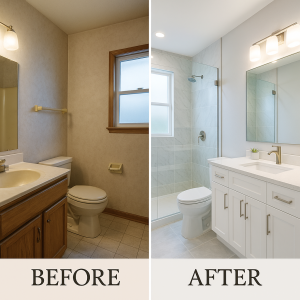
A successful bathroom remodel should not only enhance your living experience but also add value to your home. Here’s how to get the best return on your investment:
- Choose Timeless Designs: Avoid overly trendy finishes that may age poorly. Opt for classic color schemes like white, gray, or soft neutrals, and fixtures with universal appeal.
- Install Energy-Efficient Fixtures: Use LED lighting, motion-sensor faucets, and EPA WaterSense-labeled toilets and showerheads to reduce utility bills while increasing market appeal.
- Use High-Durability Materials: Porcelain, quartz, and acrylic products last longer and require less maintenance. Durable materials extend the lifespan of your renovation and reduce repair needs.
- Focus on Functionality: Include features like built-in storage, anti-slip flooring, and ADA-compliant elements (like grab bars) to appeal to a broader range of buyers.
- Hire Experts: Partnering with experienced bathroom remodeling contractors—like Modern Home Contracting—ensures flawless execution and reduces the chances of budget overruns or substandard work. Our team brings experience, quality craftsmanship, and personalized service to every project.
Related Kitchen Remodel Tips for Full Home Upgrades
If you’re planning to renovate both the bathroom and kitchen, integrating designs and timelines can maximize savings and improve overall home cohesion.
- Coordinate Kitchen Layout and Style: Align your kitchen remodel with your bathroom design to maintain a cohesive look. Use similar color palettes, finishes, and cabinetry styles for a unified home aesthetic.
- Upgrade Cabinets and Countertops: Choose high-quality, water-resistant materials like quartz or granite. For a small kitchen remodel, consider space-saving cabinetry like corner drawers, pull-out pantries, or open shelving.
- Match Flooring Choices: Use durable flooring like LVP or porcelain tile that transitions well between the kitchen and bathroom for a consistent and practical look.
- Balance Style with Function: Incorporate practical kitchen remodel ideas that align with how your household uses the space—whether for entertaining, cooking, or storage.
- Set a Realistic Kitchen Renovation Budget: Just like with bathrooms, it’s important to allocate funds for each element, including unexpected repairs, appliance upgrades, or custom features.
- Work with Experienced Kitchen Remodeling Contractors: At Modern Home Contracting, we specialize in full home renovations. Whether it’s a small kitchen remodel or a major kitchen renovation, our experts guide you through every step for a seamless, stress-free experience.
Extended Tips for Home Remodeling Success
To ensure a smooth renovation across your home, follow these broader remodeling tips:
- Remodeling Permits and Regulations
Always check local building codes and obtain the necessary permits before starting your remodel. Non-compliance can lead to fines or insurance issues. - Home Remodeling Timeline
Plan your renovation around your family’s lifestyle and seasonal needs. Avoid holidays or peak seasons when contractor availability is limited. - Home Remodeling Financing
Look for financing options that offer low interest rates and flexible terms. Compare lender offers or ask your contractor if they partner with financing providers. - Remodeling Cost vs. Value
Prioritize projects with strong ROI—such as bathrooms, kitchens, and entryways. Avoid over-customizing spaces that might limit future resale appeal. - Home Remodeling Mistakes to Avoid
Common pitfalls include poor planning, ignoring ventilation needs, using low-quality materials, skipping inspections, and hiring unqualified workers. Avoid these by doing thorough research and working with trusted professionals.
FAQs: Bathroom Remodel Questions Answered
How much does a bathroom remodel cost?
Costs vary based on size, materials, and labor. A small bathroom remodel may range from $5,000 to $15,000, while a luxury bathroom renovation can exceed $30,000.
How long does a bathroom remodel take?
The typical bathroom remodel timeline ranges from 2 to 4 weeks, depending on scope and complexity.
What materials are best for bathroom flooring?
Porcelain tile, luxury vinyl plank, and natural stone are top picks for durability and water resistance.
Can I finance my bathroom remodel?
Yes, Modern Home Contracting offers bathroom remodel financing options to make your project more affordable.
Should I do a DIY bathroom remodel?
DIY projects are ideal for simple upgrades. For plumbing, electrical, or tiling, hiring professional bathroom remodeling contractors is recommended.
What increases bathroom remodel ROI?
Use energy-efficient lighting, low-flow fixtures, neutral design schemes, and high-quality materials.
Are eco-friendly materials worth it?
Yes! They reduce your environmental footprint, often lower utility bills, and appeal to future buyers.
Start Your Bathroom Remodel with Confidence
At Modern Home Contracting LLC, we specialize in delivering high-quality kitchen and bathroom renovations tailored to your lifestyle, budget, and design goals. Whether you’re searching for kitchen remodeling near me, bathroom remodeling contractors, or full home remodeling services, we bring years of experience, certified experts, and creative solutions to every project.
From small bathroom remodels to luxury kitchen renovations, we offer:
- Transparent pricing and estimates
- Reliable timelines and delivery
- Eco-friendly material options
- Complete project management
Let’s turn your vision into value.
Visit us at: 91 Ferry Street, Suite 3, Jersey City, NJ 07307
Call: +1 (551) 247 9297
Email: modhome6@gmail.com
Schedule a free consultation today and discover why homeowners trust Modern Home Contracting for smart, stylish, and sustainable renovations.