[ez-toc]
Essential Steps for Successful Home Remodeling Projects
When it comes to enhancing the comfort, function, and value of your home, few projects are as transformative as a kitchen remodel or bathroom renovation. At Modern Home Contracting, we specialize in turning outdated spaces into beautifully functional environments. Whether you’re searching for “kitchen remodeling near me” or exploring the best bathroom remodeling contractors, this guide will walk you through essential steps, common problems, smart ideas, and effective budgeting for your next home improvement journey.
Why Kitchen and Bathroom Remodeling Matters
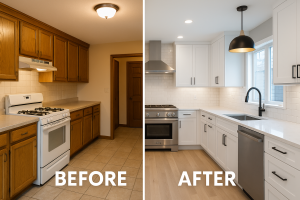
A well-planned kitchen renovation or bathroom remodel does more than improve aesthetics. It enhances workflow, increases storage, boosts home value, and contributes to a more sustainable lifestyle. It can help you reimagine how your family lives, cooks, and relaxes in the same space every day. Whether you’re remodeling a primary bathroom or investing in an open-concept kitchen, thoughtful updates bring comfort and functionality.
Moreover, kitchen and bathroom updates consistently offer the best return on investment (ROI) among home improvement projects. A well-renovated kitchen or spa-inspired bathroom is a major selling point for future buyers, making these upgrades not just a lifestyle improvement but a financial asset.
Step 1: Define Your Remodeling Goals and Priorities
Identify Needs and Set Goals
Before jumping into your remodeling project, it’s essential to assess what isn’t working in your current space. Maybe your kitchen layout doesn’t flow properly, or your bathroom feels outdated and lacks storage. Are you looking for a sleek, contemporary kitchen design with smart appliances? Or do you need to optimize space in a small bathroom remodel?
- Do you need better storage? Custom cabinetry, walk-in pantries, and floating shelves can drastically improve organization.
- Are you aiming for a more modern aesthetic? Think of streamlined vanities, slab-style kitchen cabinets, and minimalist lighting.
- Is functionality or sustainability a top priority? Eco-friendly kitchen remodel and water-saving bathroom fixtures may be the focus.
Setting clear priorities helps in selecting designs, finishes, and the scope of work, whether for a small kitchen remodel or a large-scale bathroom overhaul.
Choose Between DIY and Professional Contractors
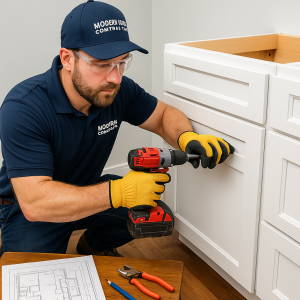
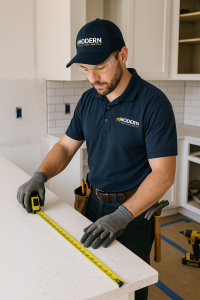
While a DIY kitchen remodel might seem like a great way to save money, it’s important to consider the complexity of your project. DIY works best for surface-level updates like painting cabinets, installing new hardware, or swapping out light fixtures.
For more intensive tasks like rerouting plumbing, custom cabinetry, or tile work, hiring experienced kitchen remodeling contractors or bathroom remodeling contractors ensures the job is done safely, on time, and up to code. You’ll also benefit from professional design input and access to premium materials and warranties.
Step 2: Plan Your Budget Wisely
Understand Kitchen and Bathroom Remodel Costs
The first step in any renovation is understanding the expected expenses. Kitchen remodel cost and bathroom remodel cost can vary widely depending on location, size, material choices, and labor.
- Minor kitchen remodels may range from $10,000–$25,000.
- Mid-range to high-end kitchen renovations can go from $30,000 to $80,000+.
- Small bathroom remodels might start at $7,000.
- Luxury bathroom remodels with custom tile and spa features can exceed $30,000.
Being realistic about your kitchen renovation budget or bathroom renovation budget will help you avoid surprises down the line.
Budget Tips for Smart Spending
- Use an itemized kitchen or bathroom remodel checklist to track expenses.
- Prioritize spending on long-lasting upgrades like kitchen cabinets, bathroom tiles, and countertops.
- Consider affordable remodeling options such as laminate flooring or refinishing instead of replacing.
- Allocate 10–20% of your budget as a contingency for unforeseen costs like mold, plumbing issues, or structural changes.
Explore Remodel Financing Options
If your project exceeds your current savings, consider kitchen remodel financing or bathroom remodel financing options such as:
- Personal loans from banks or credit unions
- Home equity loans or lines of credit (HELOCs)
- Remodeling-specific financing through your contractor
- Credit card financing for short-term, low-interest options
Each has pros and cons, so it’s wise to compare rates, terms, and eligibility.
Factors That Influence Remodeling Costs
Understanding the elements that impact remodeling costs will help you set realistic expectations:
- Geographic location: Renovation costs are generally higher in metropolitan areas.
- Material quality: Premium finishes like quartz countertops or imported tiles increase expenses.
- Customization level: Custom cabinetry and built-ins are costlier than off-the-shelf solutions.
- Labor availability: High demand for skilled contractors can raise project costs.
- Time of year: Busy seasons (spring/summer) may come with higher prices.
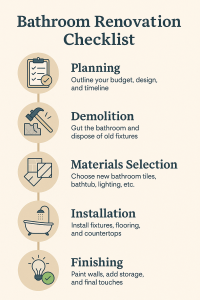
Step 3: Create a Remodeling Checklist
Kitchen Remodel Checklist
A detailed checklist is crucial for staying organized and on schedule:
- Set remodeling goals and define design priorities
- Choose your kitchen layout design (galley, L-shape, U-shape, open concept)
- Hire experienced kitchen remodeling contractors
- Decide on flooring materials (tile, wood, vinyl)
- Select kitchen lighting options (task, ambient, accent)
- Finalize kitchen cabinets, including style and storage features
- Pick countertops that balance durability and aesthetics
- Choose energy-efficient appliances
- Obtain required remodeling permits and schedule inspections
- Plan for temporary kitchen setup during construction
- Conduct a final walkthrough with your contractor
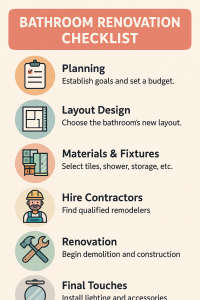
Bathroom Remodel Checklist
Bathroom renovations require careful planning due to plumbing and moisture concerns:
- Assess whether you need a bathroom shower remodel, a bathtub remodel, or both
- Determine if you’re doing a small bathroom remodel or expanding the layout
- Choose flooring (water-resistant tile, stone, vinyl)
- Select bathroom lighting (vanity lights, recessed lighting, natural light options)
- Plan for bathroom storage ideas (vanities, wall cabinets, shelves)
- Choose finishes and fixtures (faucets, showerheads, towel bars)
- Hire reputable bathroom remodeling contractors
- Order materials early to avoid delays
- Ensure proper waterproofing and ventilation systems
- Conduct a final quality inspection with the contractor
Step 4: Focus on Layout and Design
Smart Kitchen Layout Design Ideas
- A functional kitchen layout maximizes space, flow, and accessibility. Every inch should contribute to improving how you cook and move. Consider:
- Work triangle for optimal placement of stove, sink, and refrigerator
- Open shelving for visibility and space-saving in small kitchens
- Kitchen islands to increase counter space and storage
- Dedicated pantry areas for dry storage, appliance garages, and bulk goods
- Zoning for food prep, cleanup, and serving stations
- A professional designer can help you optimize layout while aligning it with your style and budget.
Small Kitchen Remodel Solutions
- Small spaces can still be stylish and functional with the right design:
- Vertical storage: Tall cabinets and wall-mounted organizers
- Reflective surfaces: High-gloss cabinetry or mirrored backsplashes to bounce light
- Compact appliances: Slim refrigerators and under-counter dishwashers
- Pull-out cabinets: Maximize accessibility and avoid wasted corners
- Hidden garbage/recycling: Built-in solutions that maintain aesthetic appeal
- These design choices maximize functionality and minimize visual clutter.
- Functional Bathroom Design Concepts
- Designing a bathroom is about comfort, safety, and storage:
- Floating vanities: Create the illusion of more space and make cleaning easier
- Walk-in showers: Ideal for mobility, space-saving, and modern appeal
- Light-colored tiles: Make the room feel larger and brighter
- Wall niches: Recessed storage in showers or beside bathtubs for toiletries
- Sliding doors: Save space compared to swinging doors
- These features enhance both functionality and style, especially in compact or shared bathrooms.
Step 5: Choose the Right Materials
Kitchen Materials
- Your material choices influence durability, style, and maintenance:
- Kitchen Cabinets: Choose between solid wood (high durability), MDF (cost-effective), and plywood core cabinets
- Kitchen Countertops: Quartz (low maintenance), granite (natural luxury), butcher block (warm, affordable)
- Kitchen Flooring: Vinyl plank (water-resistant and budget-friendly), ceramic tile (durability), hardwood (premium feel)
- Kitchen Lighting: Layered lighting with pendant fixtures, task lights under cabinets, and dimmable ceiling lights
Bathroom Materials
- Bathrooms demand moisture-resistant and easy-to-clean materials:
- Bathroom Tiles: Porcelain and ceramic offer durability and easy maintenance
- Bathroom Flooring: Waterproof vinyl, textured stone for slip-resistance, or large-format tiles
- Bathroom Lighting: Combine task lighting at mirrors with ambient ceiling lights and dimmable options
- Fixtures: Chrome, brushed nickel, and matte black finishes for faucets, handles, and showerheads
- Opt for high-quality finishes that can withstand frequent use and humidity.
- Step 6: Incorporate Sustainability
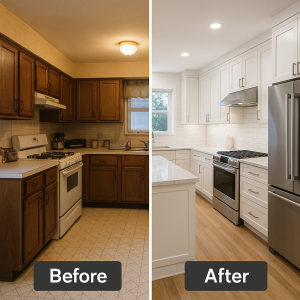
- Eco-Friendly Kitchen Remodel Ideas
- Eco-conscious renovations reduce your environmental footprint and utility bills:
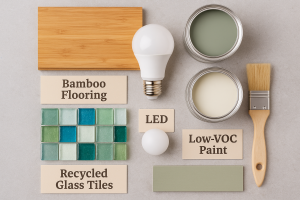
- Recycled materials: Countertops made from recycled glass or composite stone
- Energy-efficient appliances: ENERGY STAR-rated refrigerators, ovens, and dishwashers
- LED lighting: Long-lasting and efficient
- Low-VOC paints and adhesives: Improve indoor air quality
- Bamboo cabinetry: Renewable and stylish
Eco-Friendly Bathroom Remodeling
- Sustainability in bathrooms improves water efficiency and indoor air quality:
- Dual flush toilets: Conserve water with adjustable flow
- Low-flow fixtures: Showerheads and faucets that reduce consumption
- VOC-free paints: Safer for families and the environment
- Natural ventilation and skylights: Reduce moisture and lighting needs
- Recycled tiles: Eco-friendly and elegant
Step 7: Schedule and Timeline Management
Kitchen Remodel Timeline
- Planning and setting realistic timelines ensures smoother execution:
- Planning and Design: 2–3 weeks for layout, materials, and contractor selection
- Demolition: 1 week, including clearing appliances and cabinets
- Construction and Installation: 4–8 weeks depending on scope
- Final walkthrough and adjustments: 1 week for punch list and cleanup
- Bathroom Remodel Timeline
- Similar steps apply but on a slightly smaller scale:
- Planning: 1–2 weeks to finalize design and schedule contractors
- Demolition: 1 week including removal of tile and fixtures
- Installation: 3–6 weeks depending on complexity and inspection schedules
- Clean-up and inspection: 1 week
- Step 8: Avoid Common Remodeling Mistakes
- Home Remodeling Mistakes to Avoid
- Even well-planned projects can derail without careful oversight:
- Hiring unqualified contractors: Always verify licensing and reviews
- Ignoring permits and regulations: Risk fines, redo work, or reduce resale value
- Over-focusing on trends: Trends fade; prioritize timeless design
- Underestimating remodeling cost vs. value: Budget realistically
- Skipping professional design input: Leads to inefficient or awkward spaces
- Planning ahead, hiring pros, and budgeting carefully can save time and money in the long run.
Tips and Advice
- Get multiple quotes: Compare at least three estimates to ensure fair pricing and a clear understanding of services offered.
- Check contractor reviews: Look for reviews on Google, Yelp, and Houzz to gauge the contractor’s reliability and craftsmanship.
- Don’t skip insurance and permits: Always confirm that your contractor has liability insurance and handles proper permits to avoid legal or safety issues.
- Visit showrooms for inspiration: Showrooms let you see and feel materials, helping you make confident design decisions.
- Request a detailed scope of work: A written contract outlining materials, timelines, and payment terms helps prevent misunderstandings.
Step 9: Maximize ROI
Kitchen Remodel ROI
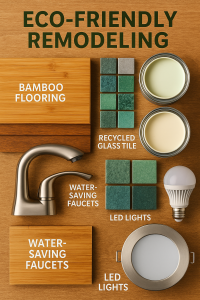
Kitchen renovations can return up to 70–80% of the investment, especially when they include functional improvements such as updated kitchen cabinets, energy-efficient appliances, modern kitchen lighting, and durable kitchen flooring. Buyers look for clean, well-lit, and practical kitchen spaces. Even a small kitchen remodel can significantly increase a home’s market value if planned well.
Bathroom Remodel ROI
Bathroom remodels recoup approximately 60–70% of their cost. The best returns come from replacing old fixtures, installing water-efficient upgrades, and improving storage. Bathroom shower remodels, modern bathroom lighting, and new bathroom tiles can make a huge impact on functionality and buyer appeal.
Renovations to Increase Home Value
Want to boost the value of your property? Focus on these upgrades:
- Modern kitchen and bathroom upgrades: Contemporary layouts, new surfaces, and sleek designs attract buyers.
- Energy-efficient fixtures: Lower utility bills and environmental impact.
- Smart lighting and appliances: Tech-savvy buyers appreciate smart thermostats, touchless faucets, and app-controlled lighting.
- Updated plumbing and electrical systems: Ensures safety, compliance, and reliability, especially in older homes.
These updates can future-proof your home and appeal to modern buyers seeking move-in-ready properties.
Step 10: Post-Remodel Care
Maintaining Your New Space
Your kitchen or bathroom remodel is an investment—protect it with proper care:
- Regular cleaning and maintenance: Wipe down surfaces frequently to prevent grime buildup and preserve finishes.
- Address small repairs early: Fix minor issues like leaks or chips before they escalate into costly repairs.
- Avoid overloading cabinets and drawers: Distribute weight evenly and don’t overfill storage to avoid warping or breakage.
- Clean tiles and grout frequently to avoid mildew: Use gentle cleaners and reseal grout annually to maintain appearance.
- Check ventilation systems: Ensure fans are working effectively in bathrooms and kitchens to reduce moisture and odor.
- Create a seasonal maintenance checklist: Include inspections for caulking, faucets, water heaters, and electrical connections.
A well-maintained remodel ensures long-term enjoyment, preserves your home’s value, and reduces the likelihood of future renovation expenses.
Frequently Asked Questions (FAQs)
What is the average kitchen remodel cost?
A typical kitchen remodel ranges from $10,000 to $50,000, depending on the size and finishes chosen. For luxury kitchens, costs can exceed $75,000.
How long does a bathroom remodel take?
A standard bathroom remodel can take 3 to 6 weeks, depending on the scope of work and material availability.
Can I do a DIY kitchen remodel?
Yes, but it depends on the complexity. DIY works well for painting, fixture changes, or backsplash updates. For electrical and plumbing, always hire a pro.
What upgrades give the best ROI?
Kitchen cabinets, countertops, and bathroom vanities with modern fixtures yield excellent ROI. Energy-efficient upgrades also boost home value.
Do I need permits for my kitchen or bathroom remodel?
In most cases, yes. Especially for structural, plumbing, or electrical changes. Your contractor should handle this for you.
What’s the best way to find trusted kitchen or bathroom remodeling contractors?
Check local reviews, ask for referrals, and make sure contractors are licensed, bonded, and insured.
Start Your Home Transformation with Modern Home Contracting LLC
At Modern Home Contracting LLC, we bring decades of experience in kitchen remodeling, bathroom renovations, and full home improvements across Jersey City and surrounding areas. Whether you’re searching for “kitchen remodeling near me,” planning a small bathroom remodel, or exploring eco-friendly remodeling ideas, our skilled team is here to guide you every step of the way.
Let us turn your vision into reality—on time and within budget. Contact us today for a free consultation!
Address: 91 Ferry Street, Suite 3, Jersey City, NJ 07307
Phone: +1 (551) 247 9297
Email: modhome6@gmail.com
Transform your home with confidence—partner with Modern Home Contracting LLC.